
Ceferin vs Infantino: The Power Struggle That Could Reshape World Football


Real Madrid loanee scores first career hat-trick in stunning Lyon debut
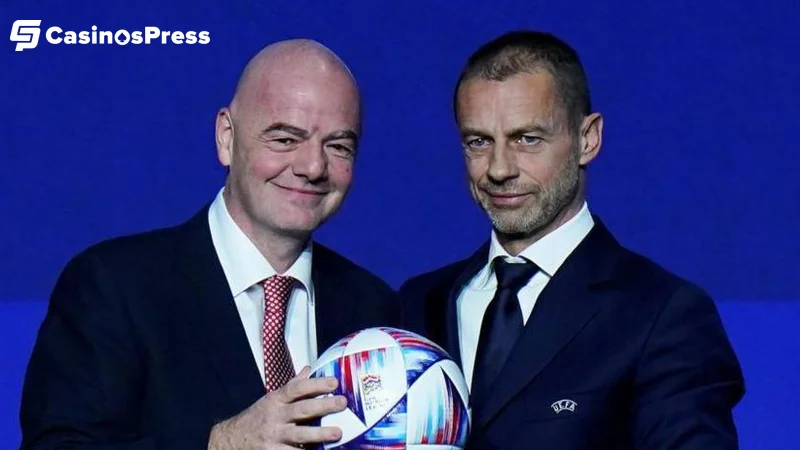
Football governance doesn't usually make headlines outside of press releases and stuffy congresses. But right now, the two most powerful men in the game are in open conflict, and the consequences could reshape how the World Cup is run, funded and ultimately controlled for decades to come.
How We Got Here
This all started when Fifa quietly attempted to create a new commercial vehicle called Fifa Forward Enterprise. The idea was to bundle up the ticketing and commercial rights for all Fifa competitions, including the World Cup, into one company and sell a 21% stake to private investors.
It was scrapped after Uefa and its member associations threatened to boycott future World Cups entirely. That's not a small gesture. That's Europe, the continent that produces the most competitive football on the planet, telling Fifa it would walk away from the biggest tournament in sport.
Uefa president Aleksander Ceferin didn't mince words. In his view, the FFE plan was worse than the European Super League proposal that collapsed in April 2021. That comparison is deliberate and damaging. The Super League was widely seen as an act of greed by elite clubs. Ceferin is now saying Infantino's plan was greedier still, and that it would have meant football itself being sold to private money.
We think that framing is correct. At least the Super League clubs were selling something they built. This was the World Cup, a tournament that belongs to the global game.
The Balogun Affair Changes Everything
The commercial row might have stayed as an internal governance dispute if not for the Folarin Balogun situation. When the US striker had a red card overturned ahead of the World Cup knockout stage, most people assumed it was a legal technicality. Then Donald Trump confirmed he personally called Gianni Infantino and asked for the sanction to be reviewed.
Infantino's office called it an independent decision. Trump said he made the call and it happened. Those two things cannot both be true.
For anyone who cares about the integrity of the World Cup as a sporting competition, that is a serious problem. If results, suspensions and punishments can be influenced by political leaders calling the Fifa president directly, then the credibility of the tournament is compromised. Ceferin has said publicly that almost everyone in the game was shocked. The silence from others, he implies, is fear rather than indifference.
Infantino's Isolation Is Growing
Infantino is clearly aware of how isolated he has become in Europe. He's been travelling constantly, shoring up support in the Caribbean, attending the E-Sports World Cup in Paris alongside Emmanuel Macron and Saudi Crown Prince Mohammed bin Salman. That guest list tells you something about where Infantino's political alliances now sit.
Ceferin's dig that someone should remind Infantino he is a European is pointed. Infantino spent 16 years working at Uefa, nine of them as general secretary. He was backed by European associations when he first ran for the Fifa presidency. That support has now evaporated. The home nations have withdrawn their backing. Uefa says it has lost confidence in him entirely.
For Infantino, the World Cup has become both his greatest asset and his biggest liability. It generates the money that funds his influence. But his handling of it is now the thing that threatens to end his career.
Our Read on Where This Goes
Ceferin has confirmed he won't run for the Fifa presidency in 2027, when Infantino will seek a fourth term. His reasoning is smart. He stays credible precisely because he's not chasing the job. That makes him a far more dangerous opponent.
Infantino will likely survive in the short term. He has support across Africa, Asia and the Americas, and that's enough votes to hold on. But the World Cup brand has taken a hit, and the next major tournament played under his watch will be watched more closely than ever.
For football fans and those watching the betting markets around major tournaments, the political instability at the top of the game is worth tracking. Governance chaos has a habit of affecting competition structures, host decisions and tournament formats in ways that move odds and reshape expectations.
The World Cup belongs to everyone. Right now, the fight over who actually controls it is far from over.
Editorial Note: Marcus Osei
Senior football writer and tactical analyst with 12+ years covering the Premier League, Champions League, and world football. Born in Accra, raised between London and Kuala Lumpur.