
X’s Algorithm Is Making Money From Racist Abuse of England Players


Real Madrid loanee scores first career hat-trick in stunning Lyon debut
Racist abuse directed at England players during the World Cup wasn't just happening in dark corners of the internet. It was being actively pushed into millions of feeds by the very platform hosting it, and that platform was making money in the process.
That's the central finding from a major piece of research covering more than 300,000 posts on X during the 2026 World Cup. Over 5,500 of those posts contained explicitly racist content targeting England players. The numbers are staggering on their own, but the real story here isn't just the volume. It's the mechanism behind it.
How a Platform Turns Hate Into Revenue
X's recommender algorithm works by pushing content that generates strong reactions to more users. Posts that provoke anger, outrage or strong emotion keep people scrolling for longer, which keeps them on the platform, which makes the platform more attractive to advertisers.
Racist posts about England players were doing exactly that. They were generating engagement, getting pushed wider, attracting more replies, and cycling back through the algorithm again. The system was essentially rewarding hate with reach.
This isn't a glitch. It's a feature of how engagement-based algorithms are designed. The platform doesn't need to endorse the content. It just needs users to react to it, and abusive posts targeting high-profile England men players deliver that reaction reliably.
X has not commented on the research findings at the time of writing.
The Players in the Crosshairs
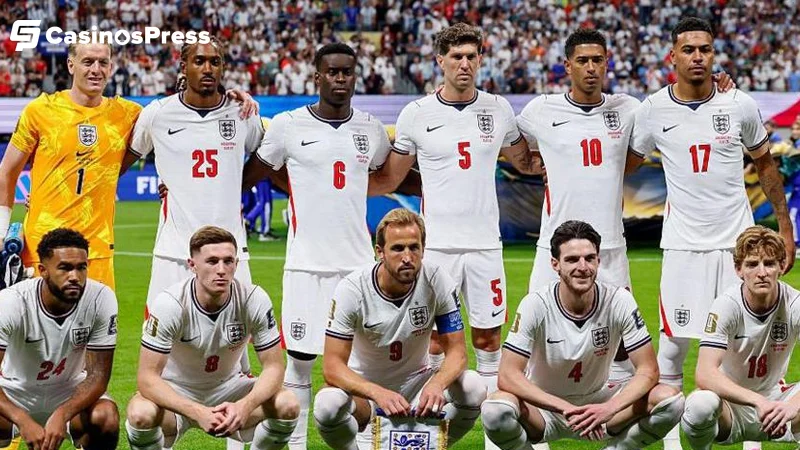
Jude Bellingham was the most targeted player overall, which tells you something about the scale of scrutiny and hostility directed at England's biggest name. Bukayo Saka and Kobbie Mainoo had the highest proportion of racist posts relative to the total number of posts mentioning them, meaning that when people were talking about them, a significant share of that conversation was explicitly racist.
Djed Spence faced a separate but equally serious wave of anti-Muslim abuse following his conversion to Islam.
What ties all of this together is that these weren't fringe incidents buried in replies nobody reads. They were being surfaced by the algorithm and placed in front of mainstream users who hadn't even sought out that content. That's the distinction that matters most here.
Why Blocking and Reporting Isn't Enough
The current approach to online abuse in football leans heavily on reactive tools. Players block accounts, report posts, and platforms eventually suspend the worst offenders. The FA has spoken about players' right to compete without being exposed to hateful content online, and that's a fair position to hold. But it doesn't solve the structural problem.
Blocking a user after they've already abused you doesn't undo the fact that thousands of other people saw the post first. Suspending an account after a post went viral doesn't reduce the reach that post already had.
The research makes a straightforward case that the tools to fix this already exist. Platforms can adjust how their algorithms recommend content. They can downrank posts that are attracting a surge of abusive replies. They can identify viral hate in real-time and limit its spread before it reaches millions of feeds. The argument isn't that this is technically impossible. It's that the platforms haven't chosen to prioritise it.
The call for Ofcom to designate major sporting events as high-risk periods is a practical suggestion. The pattern of abuse around England men's matches is well-established and entirely predictable. If the regulatory framework can require platforms to apply stricter safety rules during those windows, before abuse spikes rather than after, it at least addresses the timing problem.
Our Take
The research is damning, but it shouldn't be surprising. We've seen versions of this story play out after every major England tournament, and the response has followed the same cycle each time. Condemnation, promises, minimal change.
The difference now is that the argument has shifted from 'platforms should do more' to 'platforms are actively profiting from inaction.' That's a harder position for X and others to defend publicly, and it gives regulators a clearer mandate to act.
England men's players shouldn't have to accept racist abuse as an occupational hazard. And the fact that a platform's business model currently benefits from that abuse being amplified is the most important sentence in this entire story.
Editorial Note: Marcus Osei
Senior football writer and tactical analyst with 12+ years covering the Premier League, Champions League, and world football. Born in Accra, raised between London and Kuala Lumpur.